A mathematician’s approach to leadership

Most of my clients are curious about how a mathematician ended up as a Leadership Sculptor. You can read the biographical answer on my About Me page. However, that doesn’t tell the whole story. Another aspect is how my life as a mathematician has influenced my approach to the art of leadership. In this article, I boil it down to three main ideas that shed light on my approach.

The first idea is, I reflect on my behavior and its impact on other people. I have written another article “observe first, judge later” that discusses the benefits that accrue from watching your behaviour. This helps in two ways: first, I get a clearer picture about my strengths and potential derailers. Second, it helps me to improve my ability to guesstimate – the brain’s neural nets appreciate high quality feedback.

One client had a problem with project planning – their projects were always way off. A quick session helped them identify that the planners were never involved in the final review, so they never saw what happened to their estimates in practice. After that small change, their ability to estimate project plans improved quickly and sharply.

The second idea is, use models to get a handle on what’s happening. Life is complicated and we are inundated with information. In theory, it is possible to process all this information and then respond. In practice, life has moved on long before we get that far. Therefore, it is helpful to have a way to filter out the noise. Judiciously selected models can do this quite well. As long as we keep George E.P. Box’s words in mind, “Essentially, all models are wrong, but some are useful”. The trick is to have a wide range of simple models and select an appropriate one in any given situation. With practice and reflection, this becomes easier than you might think.

The third idea is, maintain an attitude of experimentation. When I was starting out in research, I naively hoped that leadership might turn out to be as deterministic as Newtonian physics. I got several quick wake-up calls! I quickly learned that it is helpful to treat leadership issues from a systems theory viewpoint. Thus, I learned to treat any steps I take as experiments, since the effect of an intervention in a complex system can often be surprising.

Two main reasons for that are: one, people are not as predictable as we might hope. Two, depending on where we draw the boundary on our system, we get a different idea about how to handle the problem. For example, I recently had a conversation with a client about how to solve a conflict between two group members. In the old days, I might have focused my attention on just those two and helped him figure out how to hold a conversation with them. However, by asking a few questions and helping him to sketch his system, it quickly crystallized that the source of tension was less between these two individuals, and lay more between their respective collaboration partners. Thus a whole new frame of reference for a solution opened up and he was quickly able to find a good path forward.

I’m curious to hear how your training in science or engineering influences your approach to leadership.


(Photo: Robert Scarth)

Why you should eat your cake later

Howard Hughes Medical Institute and the Burroughs Wellcome Fund organized their first lab management course in 2002. After the 2005 edition, they issued the book Making the Right Moves (which you can download by following the link). Thomas R. Cech, then president of HHMI gave the keynote to the 2002 course. He shared the lessons…

Observe first, judge later

I recently asked a group of research leaders how they would respond, when one of their people was trying to insist that a picture from a result was showing something that wasn’t in the data. The answers were varied. A few focused on the person’s need to please, a few talked about the person forgetting…

Characteristics of great leaders

One of my favourite exercises in leadership workshops with people from R&D is to ask them to take a few moments to recall the best leader with whom or for whom they ever worked and think about what it is that makes this person special. For those who have no such candidate, I suggest they…

How leadership complements management

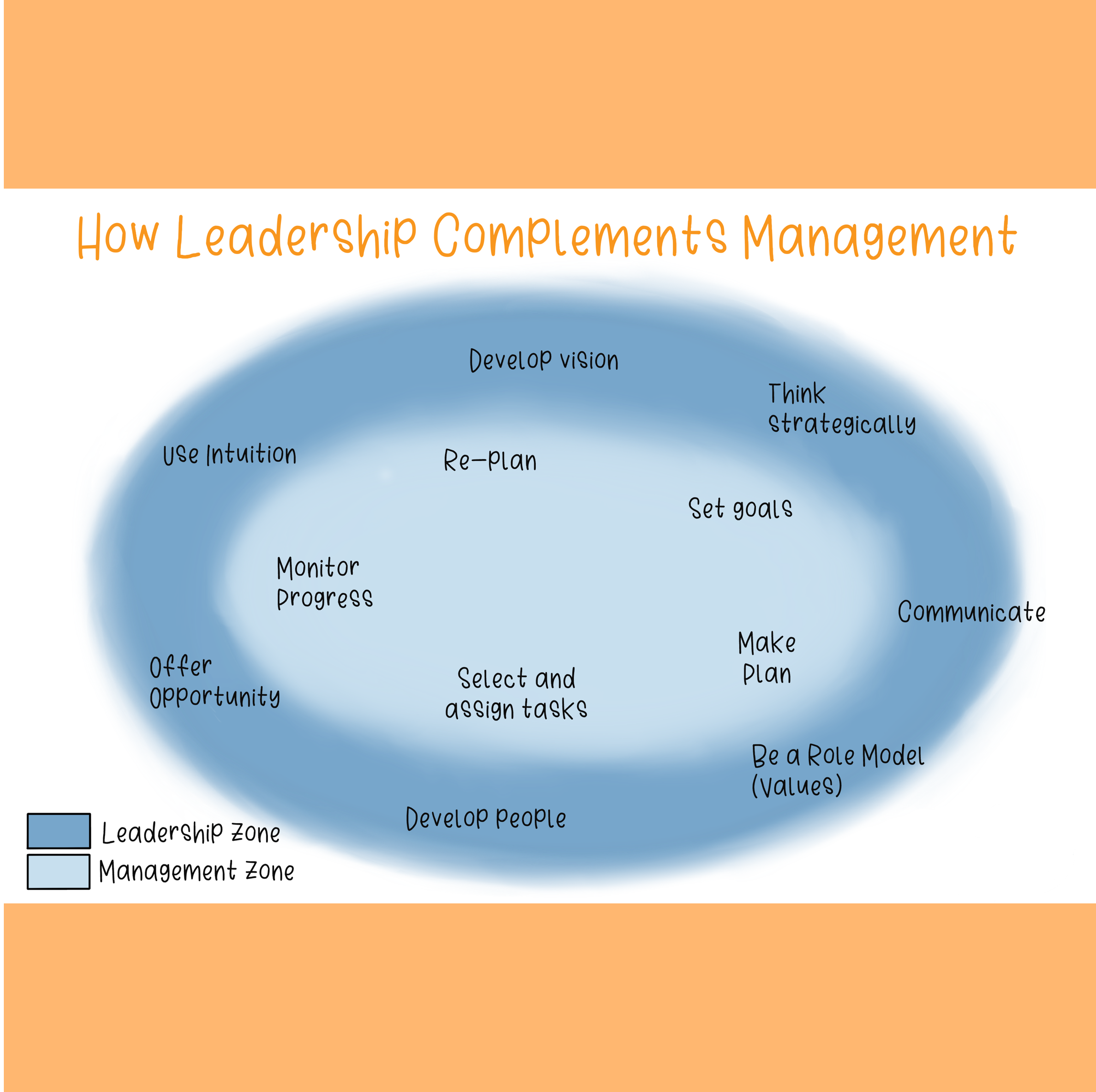
I’m often asked about the difference between leadership and management. While it is helpful to be clear about the differences, you need to be able to both lead and manage, if you want to produce top results and people. Field Marshal Lord Slim, responsible for the British campaign in Burma in WWII and a great…

What is leadership

Leadership is another of those things that people find hard to define, but can recognise it when they see it. I recently googled “leadership definition” and got 151 million hits, an indication that there are many definitions out there.  A dictionary is usually a good starting point to understand a term. Here’s how  Merriam-Webster defines…

Building the team that built “Watson”

When I was an undergraduate, artificial intelligence seemed to be a discipline long on promise and short on results. (Everthing was about “10 years away”, even 20 years later, it was still “10 years away”.) Therefore, I was pleasantly  impressed when IBM’s Watson machine won an episode of the US quiz show Jeopardy in early…

5 Essential Steps for Getting Your Team Moving

There is a lot of good literature on how to develop a high-performing team, e.g. The Wisdom of Teams by J.R. Katzenbach and Gordon K. Smith. In this article I focus on five essential steps you need to take to ensure your team is moving in the direction you want it to. Step 1 Make…

5 Myths about Self-Management

As life’s pace picks up remorselessly, clients are increasingly looking for ideas on how better to manage themselves and their time. In this short article, I explore the self-managements myths I most frequently come across. Myth #1 Time can be managed I’ve covered this one in a 2010 posting on my blog: You can read…

7 Success Tips for Communication

Since we influence people through our words or actions, our communication style plays a big part in our effectiveness as a leader. In this blog article I outline seven ideas that come up time and again in my work with leaders. Tip #1 There is an “I” in Leader Clarity is a hallmark of good…